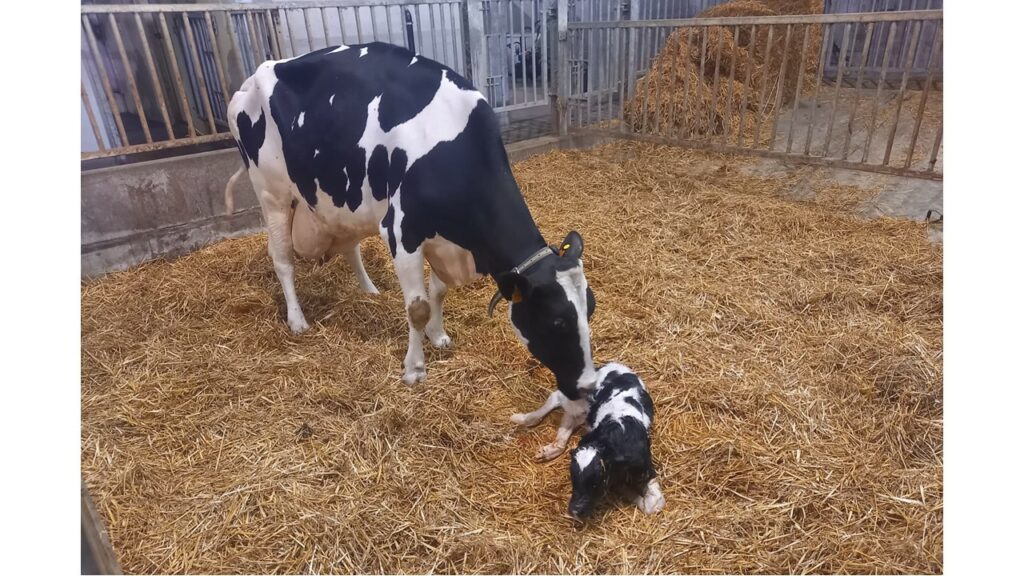
As dairy cows only produce milk after calving, the calving process is an important part of the daily farm life. It is a critical stage for both mother and calf, and farmers are doing everything they can to make sure calving goes as smoothly as possible. Farmers check on their cows regularly in the period before calving, but the actual onset of the calving process can vary depending on the cow and circumstances. Sometimes cows might calve a few weeks early or in the middle of the night, making it more difficult for the farmer to keep track of the process and to be standby in case of potential problems. Therefore, smart farming technology that can help the farmer by indicating the approaching onset of the calving process facilitates the farmers’ work and allows for better follow-up and earlier intervention when necessary. As the moment of calving approaches, cow behaviour and activity change as the cow prepares for this important moment. As such, cow activity data can provide information on the approaching birth, and thus be useful to monitor the onset of calving.
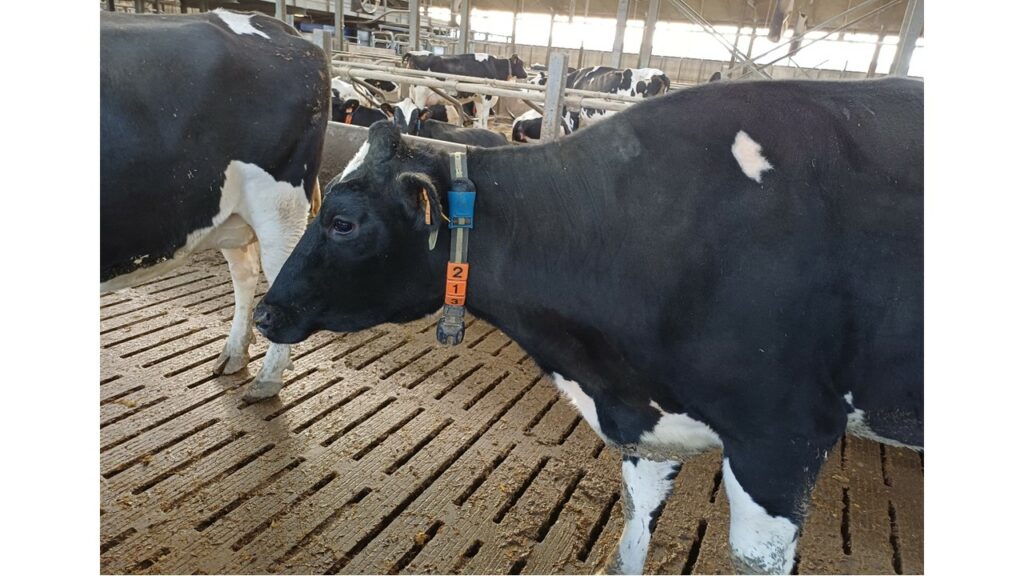
For this use case on calving monitoring, we join forces with our Latvian ZSA colleagues who collect cow activity data using pedometers in the Vecauce dairy barn of the Latvia University of Life Sciences and Technologies. Our ILVO Research Dairy Farm is located 10 km from Ghent, Belgium, and is used to conduct research on animal husbandry and welfare, animal nutrition and emissions, and precision livestock farming. At ILVO, activity data are collected using neck collars that record cows’ motion. Measuring similar aspects of cow behaviour, these sensors result in very similar data. Therefore, data of both farms are joined in an effort to improve machine learning models towards a tool to help farmers detecting the onset of calving. Favouring all cow, calf and farmer, such technology can support farm management and help improving farm sustainability in the future through the AgriDataValue project.