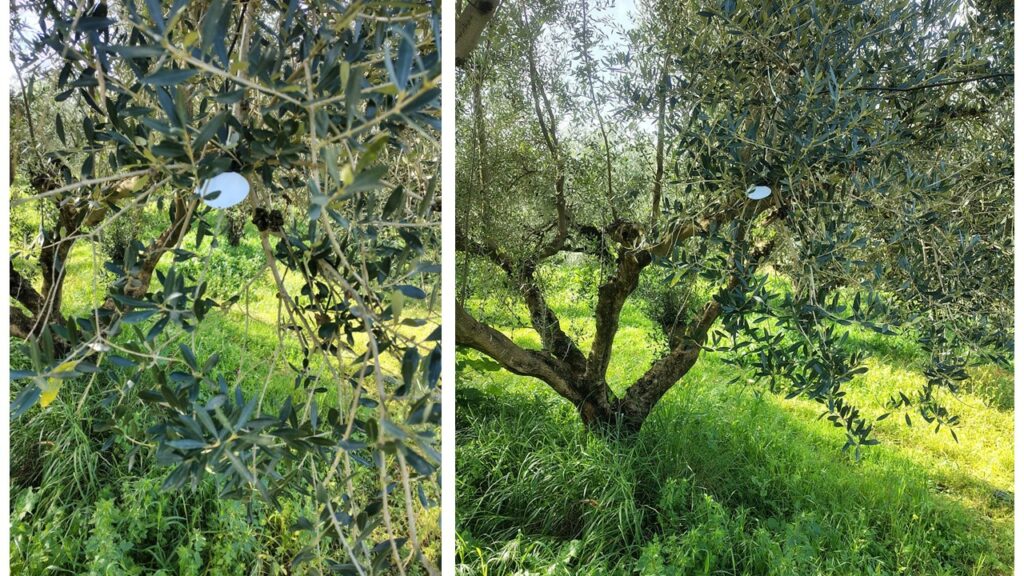

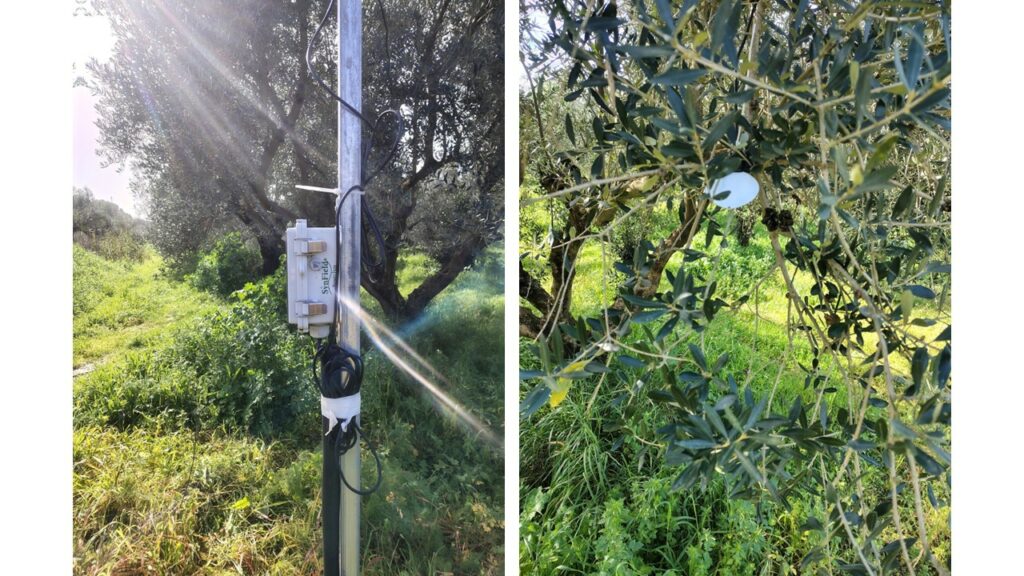
As part of the project, Synelixis installed leaf wetness sensors on existing SynField stations in NILEAS olive groves, targeting locations with a known history of olive anthracnose (gloeosporium). To date, a total of two SynField and six SynOdos devices have been installed across NILEA groves, equipped with sensors that collect real-time climatological and soil data. The recently installed leaf wetness sensors help identify and diagnose conditions that are favorable for the development of olive anthracnose (gloeosporium)
Disease development is favoured by the combination of prolonged leaf/fruit wetness, high relative humidity, and mild temperatures – conditions that are common in spring and autumn. Risk increases particularly during periods of rainfall, fog, or overnight dew, and becomes critical from autumn through harvest, especially when targeted spring plant protection has not been implemented, and when the ripening fruit is more susceptible due to olive fruit fly damage, leading to major yield losses ranging from 30% in mild epidemics to 70% in severe cases. This is why continuous monitoring of wetness duration at canopy level is essential for reliable forecasting.
Using sensor data (leaf wetness, meteorological and microclimatic variables etc), and integrating these into AI-based predictive models being developed within the AgriDataValue project, Synelixis’ digital tools translate measurements into risk indicators and send notifications/alerts when conditions converge towards an increased likelihood of infection. The aim is early warning, enabling growers and agronomists to make evidence-based plant protection decisions at the right time.