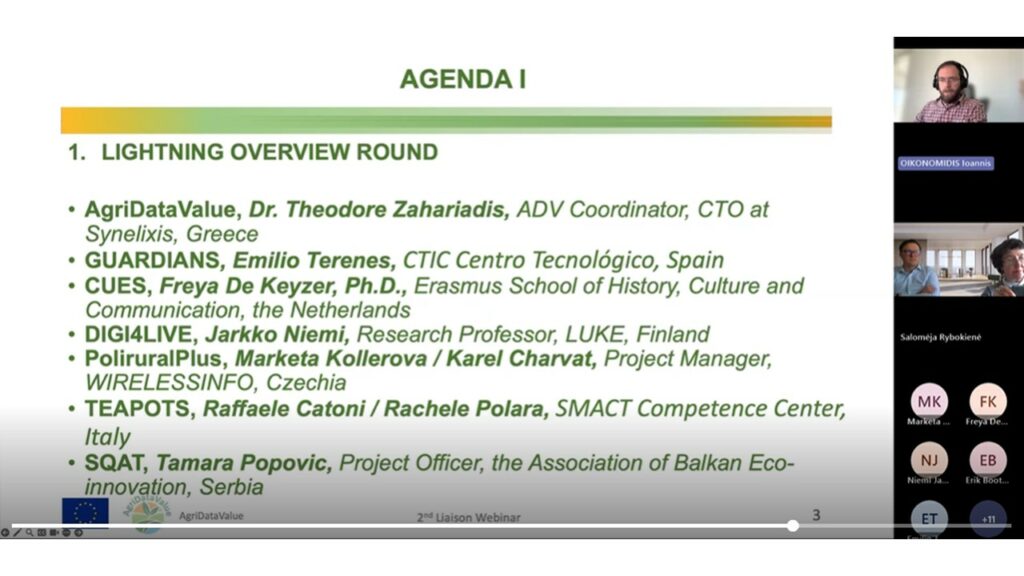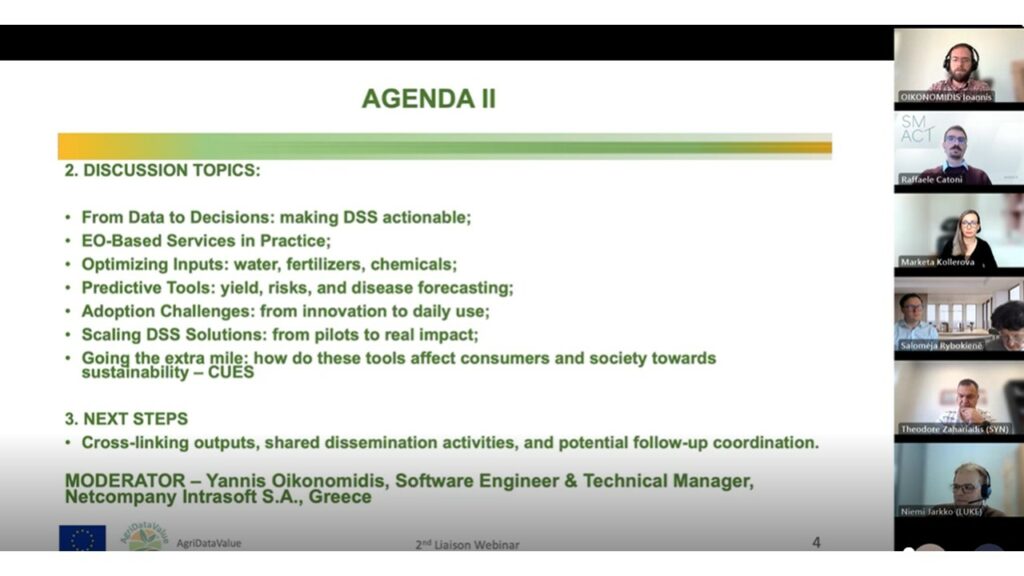
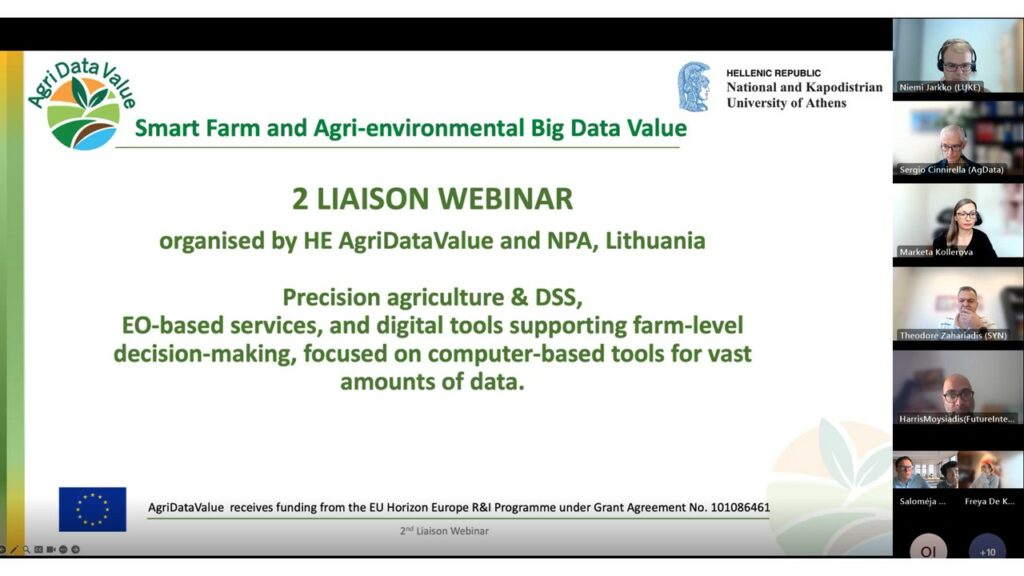
The second Liaison Webinar for Horizon Europe sister projects, organized by AgriDataValue and the National Paying Agency under the Ministry of Agriculture of Lithuania, brought together European initiatives working on digital agriculture, Earth Observation, decision support systems, data sharing, and sustainable food systems. Held online on May 15, 2026, the event proved highly valuable for knowledge exchange, engagement, and discussion. The webinar focused on how agricultural and environmental data can be transformed into practical, trusted, and actionable recommendations for farmers, advisors, public authorities, value chain actors, and consumers.
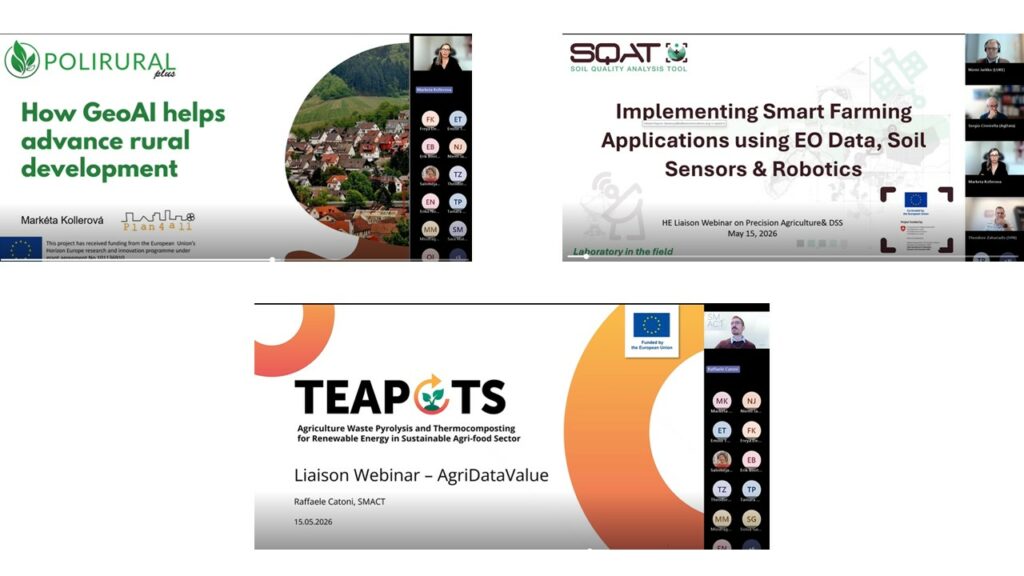
In the event participated the following sister projects: SQAT , AgriDataValue , GUARDIANS , CUES , DIGI4LIVE , PoliruralPlus and TEAPOTS.
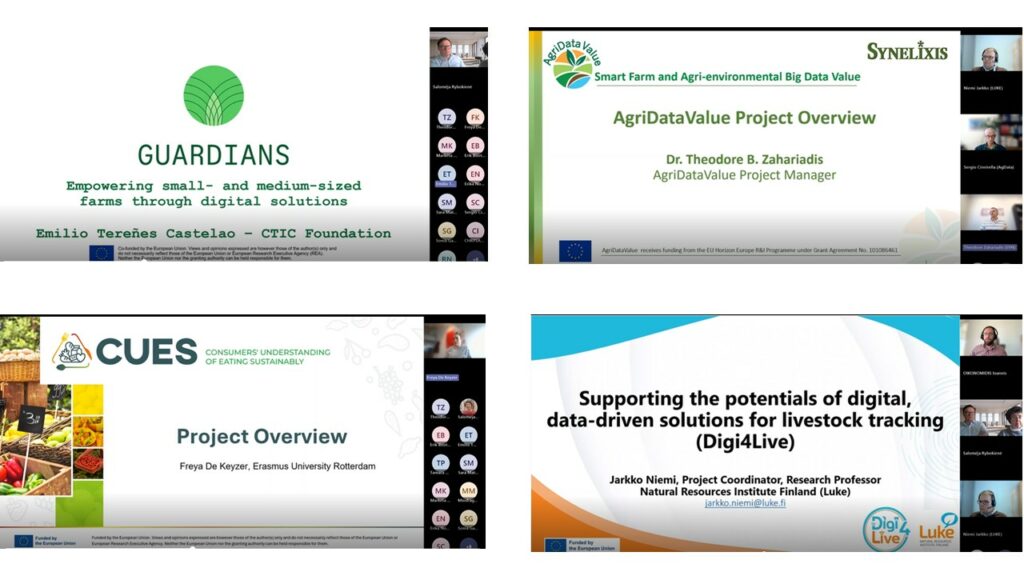
A key theme of the discussion was the transition from data collection to informed decision-making. Participants agreed that gathering data alone is not sufficient; decision support systems must deliver recommendations that are clear, relevant, and practical for real-world farming operations. Building trust in artificial intelligence emerged as a major challenge, as farmers are often hesitant to rely on recommendations generated by systems they do not fully understand, particularly when these originate outside their established advisory networks. As a result, explainable AI, transparent decision-making processes, traceability, and validation under local farming conditions were identified as critical factors for successful adoption.
Interoperability and standardisation were also highlighted as essential for the wider deployment of digital agriculture solutions. Modern farms generate vast amounts of data through sensors, machinery, digital platforms, satellite services, and administrative systems. However, these data streams frequently remain disconnected, limiting their potential value. Participants stressed the need for common standards and interoperable technologies that can seamlessly integrate diverse data sources and provide reliable inputs for decision support tools.
The discussion further explored the factors influencing the adoption of digital technologies. Participants emphasised that digital solutions must demonstrate tangible benefits, particularly for small and medium-sized farms with limited capacity for investment. Practical field demonstrations, test-before-invest schemes, peer-to-peer knowledge exchange, support from trusted intermediaries such as cooperatives, and intuitive, user-centred design were identified as effective approaches to increase confidence and encourage uptake.
Attention also turned to the broader role of sustainability data beyond the farm gate. Several speakers underlined the importance of translating complex environmental indicators into accessible and meaningful information for consumers and society. Clear communication about products, production practices, and sustainability performance can help consumers make informed choices while strengthening the connection between farmers, value chains, and policy objectives. Digital tools were recognised as key enablers in bridging these gaps and improving transparency across the agri-food system.
The webinar concluded with remarks from AgriData Partnership representative Sergio Cinnirella, who emphasised the importance of continued collaboration among Horizon Europe sister projects. Participants highlighted the value of strengthening synergies through joint dissemination activities, cross-linking project outputs, sharing knowledge and best practices, and maintaining close coordination with broader European initiatives.
Overall, the second Liaison Webinar of the Horizon Europe sister projects demonstrated a shared commitment to transforming data into trusted, actionable, and sustainable decisions. By bringing together complementary expertise in areas such as soil health, crop and livestock management, rural development, circular economy approaches, consumer engagement, and data governance, the event showcased the power of collaboration in advancing the future of smart, resilient, and sustainable agriculture.