
The AgriDataValue’s pilots and use cases have been finalized

The AgriDataValue technological tools, mechanisms, and Lean Multi-Actor Approach (LMAA) will be fully tested and validated during the AgriDataValue project lifetime through several Use Cases (UC) in 23 pilots in 9 countries, representing more than 181,000ha with 25 types of crops that span from southwest to northeast Europe, outdoor and greenhouse crops, organic and non-organic production, and more than 2,000 animals of 5 types.  In addition, more than 4,200 farmers will provide insights and more than 89,000 will be directly informed.

The pilots will also be used to collect sensor data and feedback from the involved end-users, monitor and adapt the pilots over the project lifetime. The activity will continue though out the project’s lifetime (and at least 3 years after). The captured datasets will be used for the ML training and evaluation the evolving impact in each use case. In this phase mature AgriDataValue tools and solutions will be delivered evaluating the impact and collect feedback.
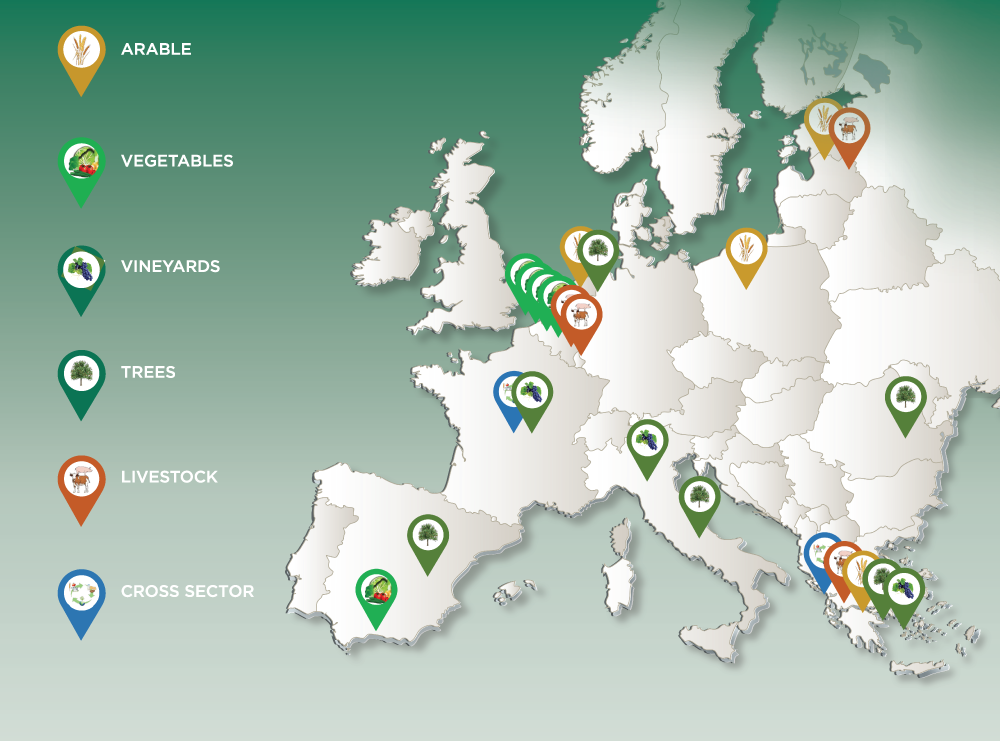
AgriDataValue Pilots Geographical Distribution

The Use Cases (UC) of the project have been finalized and grouped in clusters, addressing similar domains in different regions, crops, cultural, societal and farming contexts. Since the beginning of the AgriDataValue project, two new clusters have been added. The first one is ‘’Cluster number 6 – CAP Realization’’, and the second one is ‘’Cluster number 7 – Climate Monitoring’’. Below, a short description of each cluster is provided.

UC CLUSTER #1 – Arable Crops

Optimize the quality and quantity of crop production and increase environmental sustainability. Reduce the wasted irrigation water, fertilizers, pesticides, and energy. Involve different technologies and data platforms such as IoT sensors, edge cloud, drones/satellite visual/multispectral images and AI models.

UC CLUSTER #2 – Vegetables

Precision irrigation/ fertilization, harvest /diseases prediction for vegetables/arable crop increased production. Involve IoT sensors, edge cloud, radiation/clorofile/pH metering, multiple data platforms with geotagged photos alone with drones/satellite multispectral imagery.

UC CLUSTER #3 – Trees & Vineyard

Protect the health and quality of fruit trees and vineyards crop. Increase quality and quantity, avoid diseases with less pesticides, foresee and mitigate frost. Involve IoT weather/soil sensors, edge cloud, diverse geotagged photos’ datasets, drones/satellite multispectral imagery.

UC CLUSTER #4 – Livestock

Use edge cloud and real-time IoT sensor data (e.g. neck collar, feeders, emission sensors) together with GPS location data to monitor the cattle/pig health, activity, feeding and calving, proactively control milk and meat quality, reduce the greenhouse gas emissions and nitrogen deposition.

UC CLUSTER #5 – Cross Sector

Validate cross domain use cases (fruit, vineyards, livestock, milk, oil, biogas, manure, energy) and address both supply and demand sides of the supply chain, including interoperability and traceability of platforms, electricity production and waste management.

UC CLUSTER #6 – CAP Realization

Focuses on CAP realization tools/applications and aims to assess and manage risk through modern ML with the aim of reducing the use of pesticides, fertilisers and antibiotics. Promote modern crop monitoring technologies. Benchmarking eco-scheme monitoring tools to support the new CAP towards fair income, land use and environmental protection.

UC CLUSTER #7 – Climate Monitoring

Climate monitoring plays a vital role in agriculture by providing valuable information about weather patterns, climate variability, and climate change impacts on crop growth, pests, diseases, and water availability. It involves collecting data from weather stations, satellites, remote sensing technologies, and climate models.

AgriDataValue presents a comprehensive and innovative approach to revolutionize the agricultural sector by leveraging advanced technologies and data-driven solutions. Throughout the project, significant advancements will be made in several key areas, including data integration and interoperability, DSSs, precision agriculture, remote sensing, IoT, and blockchain technology.

Overall, the AgriDataValue project signifies a transformative shift in the agricultural sector, where data-driven approaches, advanced technologies, and collaborative frameworks converge to address the challenges and unlock the opportunities in modern agriculture. By integrating diverse datasets, developing advanced decision support systems, promoting precision agriculture and remote sensing, and exploring blockchain technology, the project paves the way for a more sustainable, efficient, and resilient agricultural ecosystem. The outcomes of the project have the potential to drive innovation, optimize resource utilization, mitigate risks, and ultimately contribute to global food security and environmental stewardship.
Read More

Enteric emissions monitored at cow level

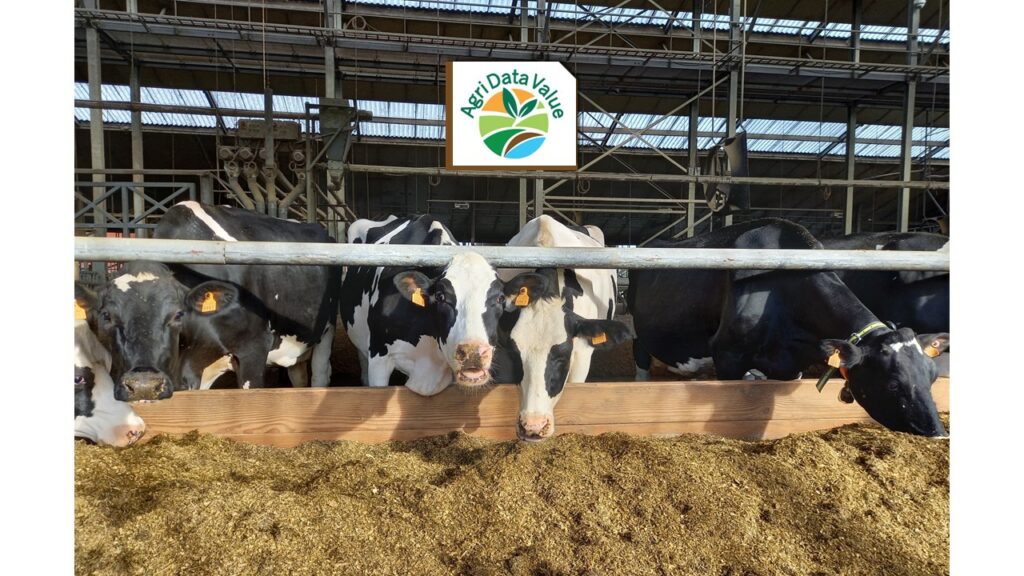
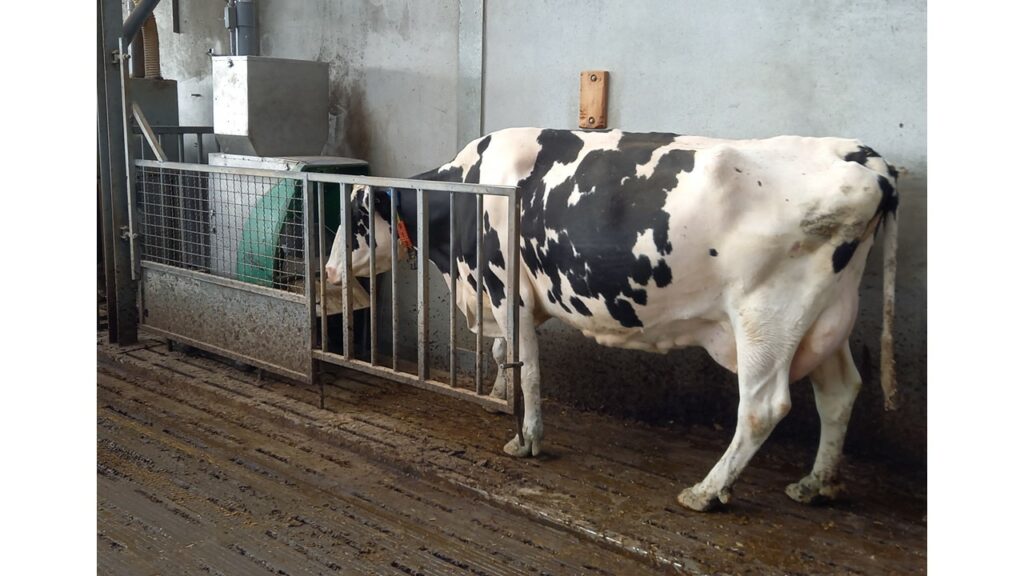
At ILVO the enteric emissions from dairy cows are being monitored to gather data that will be used to develop AI models within the AgriDataValue project. Currently, enteric emissions are already being monitored at the ILVO dairy farm using GreenFeeds (C-Lock Inc., USA). In these devices cows are being fed small amounts of concentrate while at the same time the concentration of methane and carbon dioxide in their breath and eructation are being measured. Cow measurements are combined into daily emission values expressed as grams CH4 per day which provide a good idea of enteric emissions from cows. As these emissions are influenced by many other factors, general cow data such as milk production, lactation stage etc. will also be made available for further analysis.

Apart from these individual measurements, SynField sensors will be used to gather more emission data from the barn environment in the future. Using the AgriDataValue platform, these data will be made available for the development of AI models to create more added value.

As one of the pilots in the AgriDataValue project, ILVO intends to further increase the range and quality of emission data and make them available to third parties in the project in order to work towards a reduction of greenhouse gasses in the dairy sector.

Read More

Securing Agricultural Data Storage with MinIO: A Robust Solution for Modern Farming Innovations

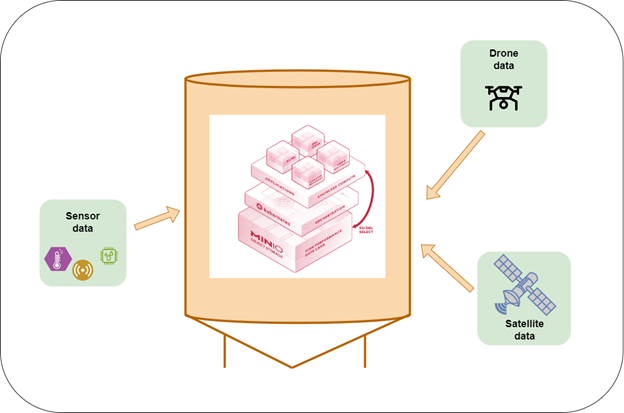
In large scale agricultural research projects such as AgriDataValue, where vast amounts of sensitive data are generated and analyzed, having a reliable and secure storage solution is required. MinIO, an open-source object storage server, emerges as a significant tool in this scenario, offering a scalable, high-performance, and secure storage platform tailored to the unique needs of agricultural innovations.

The use case partners involved in AgridataValue generate large datasets, ranging from satellite imagery to real-time IoT sensor data. MinIO’s scalable architecture allows effortless expansion, ensuring that the storage infrastructure can grow seamlessly with the increasing volume of agricultural data. Whether it is analytics for crops management or climate monitoring, MinIO’s scalability makes it a suitable choice for handling diverse data types and massive datasets.

Figure 1. MinIO Object Storage for AgriDataValue

Data security is always necessary when dealing with sensitive agricultural information. MinIO offers robust encryption mechanisms, both in transit and at rest. This means data is encrypted during transmission, safeguarding it against interception, and remains encrypted when stored, ensuring unauthorized access is impossible. This level of security instills confidence among farmers and project stakeholders, enhancing the overall trust in the technology.

Data integrity must be ensured in our project, where decisions are often data driven. MinIO’s advanced features, such as checksumming and bitrot protection, guarantee that the stored data remains intact and uncorrupted. With MinIO, AgriDataValue can rely on the accuracy and reliability of the data, enabling precise analysis and informed decision-making.

Collaboration among stakeholders is a cornerstone of successful European projects. MinIO’s support for various APIs and compatibility with standard protocols ensures seamless integration with other technologies and tools. Whether it is sharing data insights with researchers or policymakers, MinIO enables secure and controlled data collaboration, enhancing the project’s collaborative potential.

Agricultural innovation heavily relies on advanced technologies like AI and machine learning. MinIO’s compatibility with AI frameworks and analytical tools simplifies the integration process. The stored data can be seamlessly accessed and processed by AI models, enabling the project to derive meaningful insights and optimize agricultural practices effectively.

MinIO, with its scalability, security features, data integrity assurance, and seamless integration capabilities, stands as a robust solution for securing the vast and diverse datasets generated by modern agricultural projects. By choosing MinIO as the storage backbone, the AgriDataValue project not only ensures the confidentiality and integrity of agricultural data but also lays a solid foundation for future innovations. With MinIO tools in place, our project can focus on what truly matters: leveraging data-driven insights to revolutionize farming practices and secure a sustainable future for agriculture.

Read More

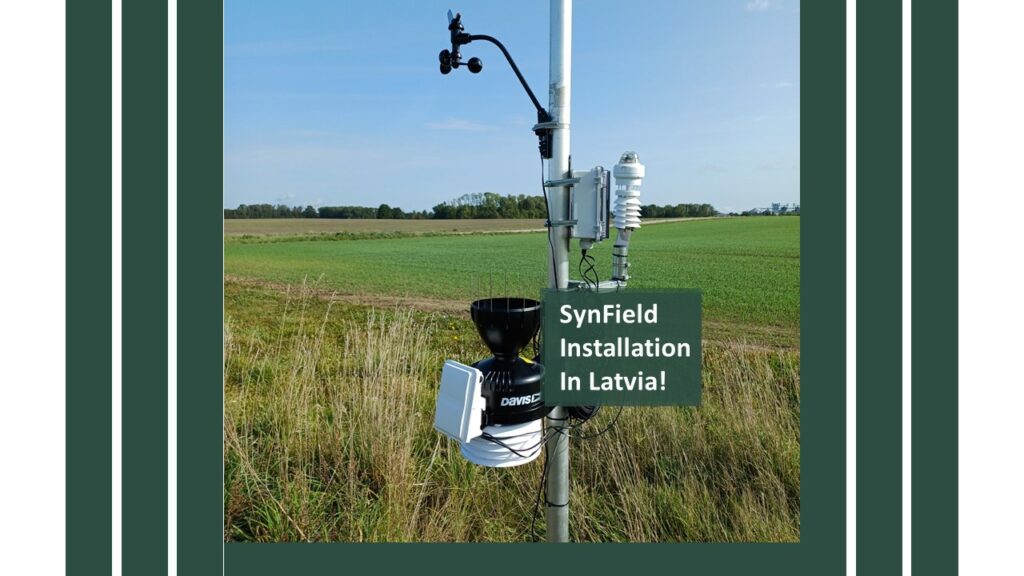
SynField installation in Latvia

The SynField system has been installed in a cultivation area in the outskirts of Zalenieki, Latvia. This is the first smart agriculture system installed within the AgriDataValue project. SynField provides the capability to monitor and record the environmental and soil conditions prevailing in the area. The installation includes a meteorological station, a soil temperature sensor and a humidity sensor. The meteorological station records the ambient temperature, relative humidity, wind intensity, wind direction and rainfall. SynField smart agriculture systems will be installed in many European countries to collect valuable data and measure key environmental parameters.

The AgriDataValue technologies will be fully tested and validated during the AgriDataValue project lifetime through the projects’ Use Cases (UC) in 9 countries, representing more than 181,000ha with 25 types of crops that span from southwest to northeast Europe, outdoor and greenhouse crops, organic and non-organic production, and more than 2,000 animals of 5 types.  In addition, more than 4,200 farmers will provide insights and more than 89,000 will be directly informed.  

Within the projects’ Use Cases, SynField smart agriculture systems will be utilized to collect valuable data in order to optimize the quality and quantity of the crop production and increase environmental sustainability. Innovative technologies such as SynField will contribute to reducing the wasted irrigation water, fertilizers, pesticides, and consumed energy.  

Read More

AgriDataValue project presented in Beitem, Belgium

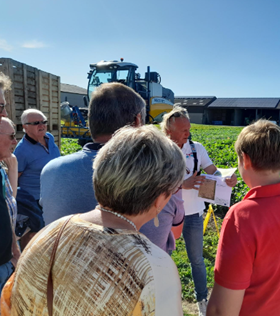
AgriDataValue participated at the ‘’Open company day’’ event hosted by the project’s  partner Inagro in Beitem, Belgium. The event was attended by more than 3000 visitors, including farmers. During the event, a demonstration of the precision agriculture technologies, that will be incorporated within the project’s pilot activities was performed. More specificaly, unwanted herbs in a celeriac field detection using drones scenario and demo has been presented.

Read More

Cultivating Transparency and Trust: AI Applications in Agriculture with XAI

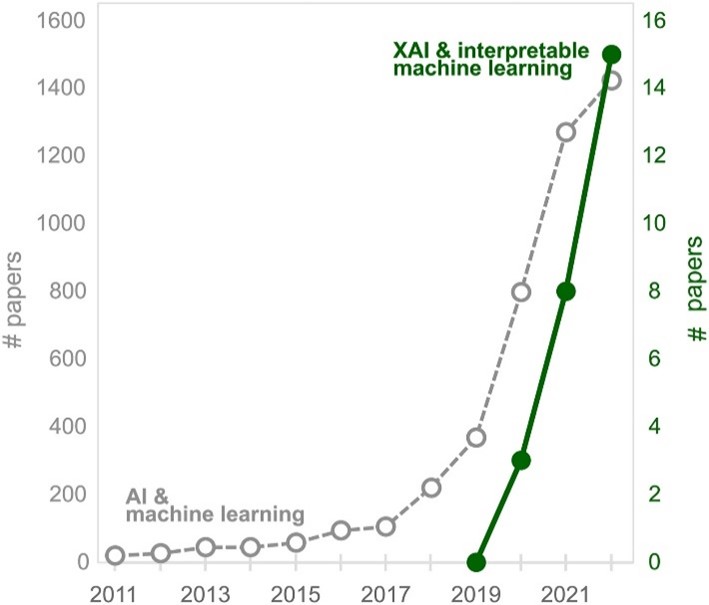
The domain of agriculture faces many challenges such as disease and pest infestation, suboptimal soil management, inadequate drainage, and irrigation, and many more. These challenges result in significant crop losses and environmental hazards, primarily due to the excessive use of chemicals. Several research have been conducted to address these issues. The field of Artificial Intelligence with its rigorous learning capabilities has become a key technique for solving different agriculture related problems. (2)  Systems are being developed to assist – agricultural experts for better solutions throughout the world. (3) Among these systems, it is widely recognised that Artificial Intelligence (AI) techniques will play a key role in the immediate foreseeable future. In parallel, also the introduction of algorithms able to explain AI algorithms (also known as eXplainable AI or XAI) is deemed necessary. An interesting analysis on this subject was done by Masahiro Ryo (4) from whose paper the following diagram is taken, illustrating the AI/XAI usage trend.

The importance of adopting an explainable AI approach is also critical when the end users are farmers or agricultural companies. By providing an explanation of the AI’s decision-making process, farmers can gain better understanding of its functioning, increase their level of trust in the technology, and make informed decisions about how to optimize their operations. This can result in significant cost savings, as farmers can target their resources on the areas that will yield the greatest benefits.

Man and Machine Gap

In the past decade, we have witnessed a massive development in Machine Learning and related fields. Due to the increased availability of big datasets and generally more accessible powerful computing resources Deep Learning techniques experienced a boost that revitalized Machine Learning. The resulting super-human performance of AI technologies in solving complex problems has made AI extremely popular. As a matter of fact, however, this increase in performance has been achieved using increasingly complex models that are not interpretable by humans (Black Box AI). Furthermore, in specific contexts closely tied to human experiences, the utilization of AI algorithms is still viewed as risky and lacking in trustworthiness. For example, in healthcare AI applications that support clinicians’ decisions by suggesting a specific treatment for a patient based on predictions of complications. Or, in banking field, AI mechanisms that suggest whether a customer who has applied for a loan is creditworthy or not. In these contexts, it is essential that decision-makers have access to information that can explain why a patient risks a specific complication or why an applicant should not get a loan. But not only that: a mechanical maintenance operator will for instance be able to make little use of information about a future system failure if he or she does not also have indications of which component is beginning to degrade, just as a farmer should know in detail which s suboptimal management will cause a predicted crop failure so that he or she can take informed and targeted action.

The XAI bridge

Contributing to these results, XAI technology has grown exponentially in the AI domain, dealing with the development of algorithms able to explain AI algorithms, thus closing the gaps. Its relevance has become evident not only in academia, but also in industry and institutions. The European Union in the AI Act (1) has explicitly declared the ‘interpretability’ of AI to be a fundamental characteristic for all AI systems, and indispensable for those AI solutions deemed to be high-risk, to be used in European soil.

Explainable AI, also known as Interpretable AI, or Explainable Machine Learning (XML), either refers to an AI system over which it is possible for humans to maintain oversight, or to the methods to achieve this.

Main XAI techniques

In AI, Machine learning (ML) algorithms can be categorized as white-box or black-box. White-box models, sometimes called glass box models, provide results that are understandable to experts in the domain. Black-box models, on the other hand, are any AI systems whose inputs and operations aren’t visible to the user, or another interested party. The goal of the XAI is to ‘open up’ black boxes and make them as like a white box as possible. XAI algorithms follow the two principles of:

  • Transparency: when the processes of extracting features from the data and generating labels can be described and motivated by the designer.
  • Interpretability: possibility of comprehending the ML model behaviour and presenting the underlying basis for decision-making in a human-understandable way.

If such algorithms fulfil these principles, they provide a basis for justifying decisions, tracking them and thereby verifying them, improving the algorithms, and exploring new facts.

Over the years, numerous methods have been introduced to describe the operation of more ‘Black-Box’ AI algorithms, for example Deep Neural Networks. These methods are characterized along two axes:

  • Local and global methods: as the name suggests, these are methods used to explain different aspects of the AI model behaviour. Local explanations explain single model decisions, while global explanations characterize the general behaviour of a model (e.g., a neuron, a layer, an entire network). In some cases, global explanation is derived from local explanations, but this is not necessarily true for all artificial intelligence models.
  • Post-hoc and Ante-hoc Methods: Post-hoc “after this event” methods are those methods that provide the explanation after the model has been trained with a standard training procedure; examples of such methods are LIME, BETA, LRP. Ante-hoc methods are those that are interpreted immanently in the system, i.e., they are transparent by nature in the sense that these methods introduce a new network architecture that produces an explanation as part of its decision.

There have been several attempts to explain the prediction of the AI models. The most active among them has been on the problem of feature attribution. The feature attribution aims to explain which part of the input is most responsible for the output of the model. For example, in Computer Vision tasks detecting plant diseases, heatmaps can show the region of the most damaged leaf area of the image that affects mostly the output. Other techniques include feature visualization, interpretability by design.

These studies have produced many tools and frameworks for developing XAI systems. A short view of them could be:

  • LIME: Uses interpretable feature space and local approximation with sparse K-LASSO.
  • SHAP: Additive method; uses Shapley values (game theory) unifies Deep LIFT, LRP, LIME.
  • Anchors: Model agnostic and rule based, sparse, with interactions.
  • Graph LIME: Interpretable model for graph networks from N-hop neighbourhood.
  • XGNN: Post-hoc global-level explanations for graph neural networks.
  • Shap Flow: Use graph-like dependency structure between variables

XAI in AgriDataValue Project

As part of the AgriDataValue project, which aims to drive digital transformation in agriculture at the European level, a specialized module is being designed and created to increase trust and confidence of end-users in this technological ecosystem that will make massive use of AI.

The Human Explainable AI Conceptual Framework Component will fully integrate  AgriDataValue data platform and Federated Machine Learning component offering two main business services to the users/citizen users:

  • The ability to investigate the identity of an already trained AI model (what algorithm it is, what data it was trained on, what processing steps the data underwent, etc.).
  • The possibility of being able to interpret a model’s decision on one or more data.


Conclusions

AI eXplainability is still object of a lively and active research that has produced, so far, many development tools and frameworks to address the difficult task of explaining the predictions of AI models, in particular those produced by Black-Box models. It is quickly becoming one of the main areas of development of the future of the AI systems. The research on XAI subject is still progressing and, in the meantime the existing methods and frameworks start being applied in application domain fields, including Agriculture, to comply with stronger and stronger interest of government bodies and Legislators. One point on which all seem to agree is that the AI of the future should conform to human values, ethical principles, and legal requirements so to ensure the privacy, security, and safety of the human users. 


References

(1) “Proposal for a Regulation of the European Parliament and of the Council laying down harmonised rules on Artificial Intelligence (Artificial Intelligence Act) and amending certain Union legislative acts, COM/2021/206 final, in https://eur-lex.europa.eu/legal-content/EN/ALL/?uri=celex:52021PC0206.

(2) Benos et al., 2021 “Machine Learning in Agriculture: A Comprehensive Updated Review”, MDPI.

(3) Gouravmoy Bannerjee, Uditendu Sarkar et al., 2018 “Artificial Intelligence in Agriculture: A Literature Survey”, ISSN 2319 – 1953.

(4) Masahiro Ryo, 2022, “Explainable artificial intelligence and interpretable machine learning for agricultural data analysis”, KeAi Communications Co.

Read More

AgriDataValue’s Journey Toward Semantic Unity in Agriculture

The agricultural sector stands at a crossroads between traditional practices and technological innovation. The AgriDataValue project is spearheading this revolution, particularly by steering semantic interoperability tasks within the agricultural data space. This initiative marks a significant impact in adopting and integrating the DEMETER’s Agriculture Information Model with the IDS Information Model, setting a precedent in the realm of data communication and management in agriculture.

Breaking New Ground in Data Economy

The core of the AgriDataValue project is to unleash the potential of data in agriculture, ensuring that it can be seamlessly shared, understood, and utilized to its fullest potential. This necessitates a common language within the data economy, particularly in agricultural spaces, to facilitate the unambiguous exchange and interpretation of data across various systems and organizations.

This is where semantic interoperability comes in. It is the glue that holds the communication between IT systems together, allowing for precise data interpretation, irrespective of the originating system’s structure or language. By ensuring data semantics are consistent across diverse systems, we pave the way for enhanced collaboration and innovation among stakeholders in the agricultural sector.

DEMETER’S AIM and IDS Information Model

The AgriDataValue project’s novelty comes from its integration of the DEMETER Agriculture Information Model (as a sector-specific information model) with the domain-agnostic IDS Information Model. The former provides a robust framework specifically tailored for the agricultural context, encompassing precise terms, structures, and standards critical to this domain.

On the other hand, the IDS Information Model serves as a universal dialect in the data economy, transcending sectors and establishing a standardized mode of data exchange and interpretation. It’s a comprehensive suite that defines common concepts, ensuring every component within a data ecosystem can effectively ‘speak’ and ‘understand’ the language of data.

When these two models converge within the scope of the AgriDataValue project, it creates a symbiotic relationship that amplifies their individual strengths. This work means stakeholders will be able to initiate a semantically interoperable, coherent, and meaningful data exchanges.

The Role of Vocabulary Hubs – Nurturing an Agricultural Data Lexicon

Central to this integration is the role of vocabulary hubs, serving as collaborative beacons within the IDS framework. These hubs are repositories and management platforms, crucial for hosting, maintaining, and documenting additional vocabularies specific to agriculture, curated from the DEMETER model and beyond.

These vocabularies, akin to dictionaries in the data realm, dispel ambiguity, ensuring information consistency across diverse systems and contexts. They are dynamic, evolving with new terms, and adaptations reflecting the growing needs and complexities of the agricultural sector.

While the path towards full semantic interoperability in agriculture is full of challenges, ranging from technical inconsistencies to organizational hurdles, the industry needs pioneers to create some usable best practices, so that they can be ready-to-use solutions to be adopted by all stakeholders of the agriculture sector.

The AgriDataValue project is a testament to the power of collaboration, standardization, and innovation. By bridging the DEMETER Agriculture Information Model with the IDS Information Model, the project is not just facilitating seamless communication in the data space today; it is setting the stage for the future of agriculture – a future where data-driven decisions propel the industry forward to new heights of success and sustainability. Join us as we continue to cultivate this digital frontier, transforming challenges into opportunities, and ideas into realities.

Read More

IDSA and OGC sign Memorandum of Understanding

The Open Geospatial Consortium (OGC) and the International Data Spaces Association (IDSA) https://internationaldataspaces.org/ (partner of AgriDataValue consortium) have signed a Memorandum of Understanding (MoU) that outlines how they will together contribute to a flourishing data economy through the creation and development of standards for data spaces that ensure sovereign, interoperable, and trusted data sharing. OGC is an international non-profit consortium aiming to make geospatial (location) information and data services FAIR – Findable, Accessible, Interoperable, and Reusable. IDSA is an international non-profit association that follows a user-driven approach to create a global standard for international data spaces and interfaces based on sovereign data sharing. The two organizations have already identified AgriDataValue as a relevant to their work project. The AgriDataValue project, throughout its lifespan, will boost data sovereignty and will not just offer an open Agri-environment Platform of Platforms for capturing, processing in-situ and upgrading data, but also data sovereignty tools.

Read More

First AgriDataValue Newsletter

Almost half a year after we officially kicked off the AgriDataValue project, we are pleased to release our first AgriDataValue Newsletter.

Read the newsletter here.

Read More

DevSecOps Approach in AgriDataValue

AgriDataValue adopts a DevSecOps approach for development, integration, testing and deployment.

The integration framework and tools are covered in this blog post, along with an indication of which ones AgriDataValue used to create the project’s CI/CD pipeline. Development, security, and operations, or DevSecOps, automate the integration of security at each stage of the software development lifecycle, from initial design through integration, testing, deployment, and software delivery [1].

The term “DevSecOps” suggests that security is integrated into the Agile and DevOps practices that development organizations adopt. Instead of relying on Quality Assurance (QA) testing at the end of the development cycle, on production, security issues are addressed as they arise in this viewpoint. Therefore, by automating the delivery of secure software without slowing the software development cycle, DevSecOps speeds up both the software development and release cycles.

The best practices for DevSecOps, as identified by IBM in July 2020 [1] may be summarized as follows:

  • Shift left: It encourages integrating security into all processes from software development to delivery from the start and moving security from the right, or the end of the DevOps process, to the left. Particularly, early involvement of cybersecurity experts in the design, development, and validation processes can help to implement security as software components are constructed. In the early stages of the software lifecycle, security risks and vulnerabilities can then be discovered and properly addressed.
  • Security education: To achieve the intersection of engineering and compliance with an organization’s security measures, software engineers must receive security training. The terms threat models, compliance checks, vulnerability tests, and implementing security controls should be understood by developers.
  • Culture: The implementation of DevSecOps requires a culture of security within organizations or even teams because it will enable people to comprehend and carry out their responsibilities in the DevSecOps lifecycle. In fact, the culture of security will involve people, communication, processes, and technology so that the chosen technological tools and the necessary software security are integrated into organizational processes.
  • Traceability, auditability, and visibility: These principles should serve as a guide for companies adopting DevSecOps in order to ensure greater insight into a more secure environment. Tracking configuration items that are well documented and distributed appropriately within the company will make it easier for DevSecOps to function there.

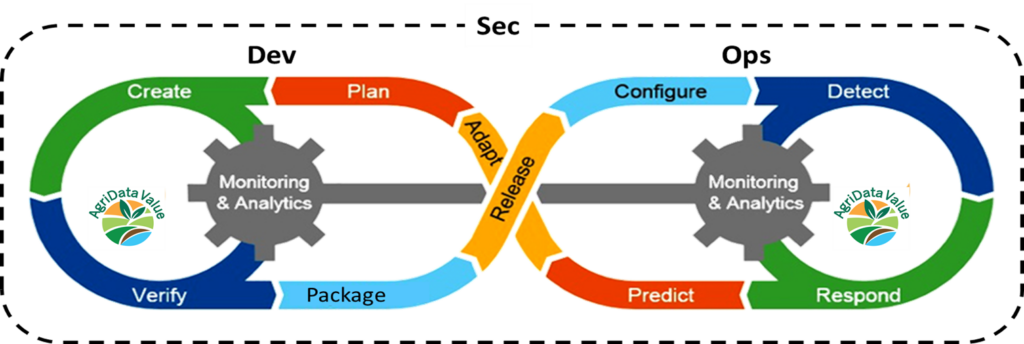
DevSecOps, as approached in AgriDataValue, is illustrated in Figure 1. According to the figure, this DevSecOps approach has the following stages: “Plan,” “Create,” “Verify,” “Package,” “Release,” “Configure,” “Detect,” “Respond,” “Predict,” and “Adapt.” These stages are correlated in a continuous workflow.

DevSecOps, as approached in AgriDataValue

The terms “Plan” and “Create” refer to the design and development of software, respectively. The terms “Verify”, “Package,” and “Release” refer to Continuous Integration and Continuous Delivery, which are handled by automated CI/CD tools, specifically GitLab in AgriDataValue. The remaining steps of the “Ops” section deal with production-level QA testing and the procedures for relaying their results back to the design and development phases in a continuous, circular interaction. Monitoring and analytics tools will make it possible to properly log throughout the entire software lifecycle during the DevOps process.  Last but not least, security is integrated into every step of this DevOps cycle, implementing security by design across the individuals, teams, and technologies involved in the creation and release of the AgriDataValue software.

[1] IBM Cloud Education, „DevSecOps,“ IBM, 30 07 2020. [Online]. Available: https://www.ibm.com/cloud/learn/devsecops

Read More